
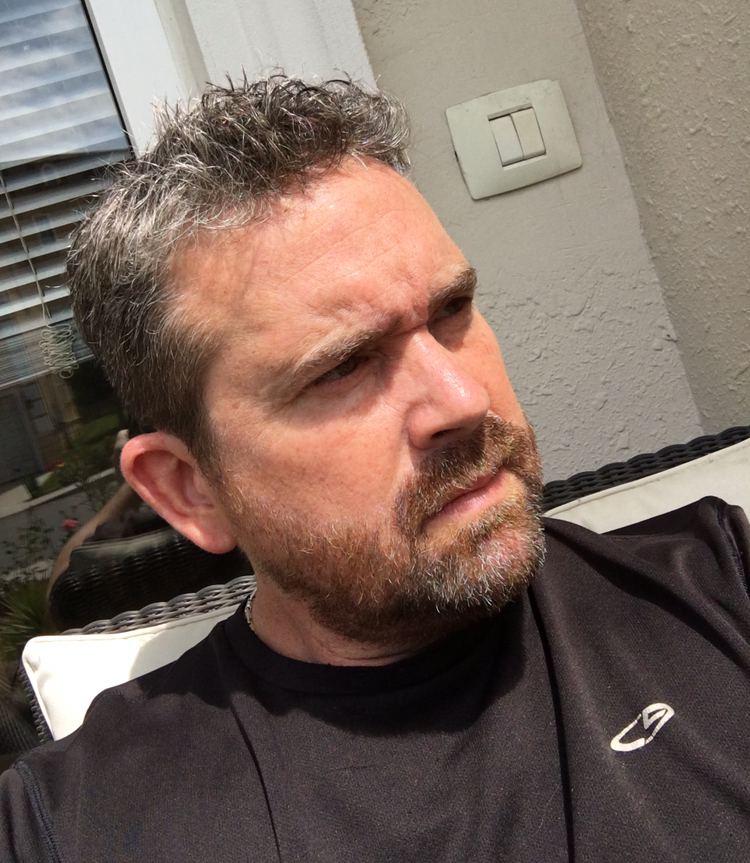
One of TISA’s teachers, Mr. Villinski, is leaving us at the end of this school year. The following is an interview conducted by the Titan Times’ Aras Soyleyen.
Aras Soyleyen: What made you decide to come to TISA in the first place? Why in Azerbaijan specifically?
Mr. Jeff Villinski: Well, we were in Azerbaijan with my wife’s job, she works with BP. Of course, within Azerbaijan, there are a lot of different schools but our children went to TISA. So it seemed pretty logical to try to become a teacher at TISA. Unfortunately I was able to and in my time able to learn something about the other schools in Azerbaijan and I quite like many of them. But my overall impression is that if I were able to choose to teach any school in Azerbaijan, it would still be at TISA.
AS: Why did you want to become a teacher?
JV: I’m trained as a scientist. I worked as a scientist for the U.S. government, and I worked as a scientist in a Cancer Research Institute. I worked as a scientist in coral reefs, and I worked as a scientist in prairies grasslands and when I recognize after all that once I moved overseas, I wasn’t particularly moved to Azerbaijan and I didn’t have a job science job, I realize now I feel like working in science but all of my jobs always had a teaching component to them. Particularly when I was in Egypt, one of my jobs was to teach at the Ministry of Health, so scientist from other countries could detect particular disease like malaria and Crimean-Congo hemorrhagic fever and even during the flu outbreaks how to properly identify flu and I realized I just very much enjoyed the teaching aspect and I’ve always been involved with kids and kids at school, so it’s the logical I’m marrying those interests.
AS: Have you ever had a moment where you want to change your learning style ?
JV: I think my learning style is very visual. So for example, when I google something I always go to Google Images right away. I see when information is presented to me visually, it’s very clear to me how it fits and works. Well, I think this pandemic has worked to make me better at an organization. We know how lesson plans begin each lesson each student can see with all the links. You’re familiar with that?
AS: Yeah.
JV: And I feel like that is one thing that has improved my teaching not my learning style per se, but improved my teaching and I hope it takes into account all the students’ different learning styles.
AS: I agree that your learning style is actually very visual.
JV: [Laughs.]
AS: Now, we can pass to question four. What advice would you give for a teacher to cope with different learning styles? A student who learns in a different way from other classmates? What would you say to teachers?
JV: I think it’s important for teachers to develop strong relationships with their students so that they can identify when a student is having trouble and then simply be open to the idea that different students learn in different ways. And the best way to find out how well a student learns is to talk to that student about it.
AS: I think it’s a really good idea. What will you miss most about TISA?
JV: Students. I can elaborate on that. I’ll tell you what I won’t miss. I’m not going to miss grading. I hate grading. I’m not going to miss meetings. I don’t like going to meetings. I’m not going to miss writing reports. I can’t stand writing reports. I am going to miss my students! I feel like that’s the best part of teaching. There’s no point in being a teacher if you don’t like developing relationships with your students so I’m going to miss that most of all.
AS: Thank you so much Mr. Jeff. You are going to be missed by all your students. Now, the next question. What is your next journey? What are your next plans?
JV: I’m not sure. I’m trying to see if I can get a job at Jake’s school, the Village School. I’m also taking a course here in Texas to become a Texas teacher. So I expect that I will somehow be involved with education, particularly for what we call middle school or MYP but I’m not exactly sure what that’s going to look like right now.
AS: The plan is like everyone’s plan, currently it is very unclear. So, hopefully you have a good next journey. Are you planning to retire from teaching anytime soon?
JV: I don’t want to retire but right now I’m not sure what opportunities [there are]. I think that even if I’m no longer formally teaching, I’ll still be involved with clubs or Boy Scouts or swimming or something like that. But in my perfect world, I would keep teaching. I would like to keep teaching.
AS: That’s really nice to hear because I really like you as a teacher. Hopefully you continue teaching and help them love science. As a last question, what advice do you give for the students who look up to you as a model?
JV: What advice do I give for students? A lot of times the advice would be specific for specific students, you know some students might have problems with resilience or some students might have problems with their confidence or their time management. But in general, I would remind students that they will get out of their education what they put into it, that the amount of effort you put in is directly related to the amount of learning you get out of it. I’d also remind them that schools in general and in particular care about you. So, if you’re struggling with something don’t keep it to yourself. Find that teacher, find that parent, find that friend, find that administrator who can help you, help you figure out a problem. And the last thing I would remind students is to have fun!
The following is a note from one of Mr. Jeff’s former students, Nikoloz Lezhava.
Dear Mr. Villinski (or Dr. Cool as we used to call you),
I would like to thank you for being one of the coolest and best teachers that I have ever had. Your biology class was one of the most interesting and the most inspiring classes I have ever been in and I was always on the top of my game and 100% concentrated and motivated. You always made sure that we fully understood all of the school material and that we were learning and understanding. You always encouraged us to support each other and help each other if we can which also brought a lot of my friends and me together. As you managed to teach drama, mathematics, and science I think at his point you can do anything on this earth so follow your dreams and remember that the sky is the limit! You always explained math and science really well and the whole class was truly learning and remembering all of the classwork. You always motivated us and gave us prizes after our hard work paid off. Hopefully, you will discover some cool vaccine and we will read about it in the New Yorker many years from now and remember the great Baku vibes that we had.
We will miss you!
Nikoloz Lezhava

 Welcome to the TMC