
Perhaps one of the most essential things about our school — and one of the reasons it is so beloved by its students — is the culture of service we have built in our community.
We have TISA Action Network and the many groups within, but the IB program itself offers 3 main grade-level projects done every year: the P8 exhibition, the M3 Community Project, and the M5 Personal Project. And the M3 students, the sole focus of this article, have done a brilliant job with their projects this year.
In September of 2021, the M3s began work on their Community Projects. Based on their passions and personal interests, they were to determine a goal based on a need they had identified in a community. Some students chose TISA as their community, while some worked with outside organizations. Through indirect action (like fundraisers and awareness campaigns) and direct action (talking to people, out-of-school trips, and more), M3 students made a change while engaging in the community.
Over the course of 2 days, the 28th of February and the 1st of March, I sat down with three Community Project groups to talk about their process and their experiences with the project.
H.A.R.M. Project

The first group included Lily, Jaya, and Bella. While Bella couldn’t join us, Lily and Jaya told me about their project, which was focused on how racism affects mental health.
What did you do for your project? What was your process?
Lily: We first decided what we should focus on and we all agreed to choose racism and mental health; we were going to add a physical body aspect, like how racism affects your mental and physical health, but as we progressed we never really got to the whole physical part of it. But we did do some research on how racism affects mental health, so that was kind of the premise of our project.
Jaya: That mostly led to our action bit; the safe spaces were more of a calming area with bean bags, candles, and music, so that action was going to help us with the physical aspect of it but we never got to that.
Lily: Yeah, we didn’t have time to go through with the safe spaces — that’s what they were called. They were these areas that were going to be placed around the school, with calming music, bean bags, and kind of just a place for relaxation.
Jaya: Or in the design room, maybe during breaks.
Lily: But we just didn’t go through with it; we didn’t have time. And that was kind of our challenge.
Jaya: It got pushed back, so that’s why we’re focusing on March 2nd. It was the International Day for the Elimination of Racism, and there was a photo booth in the SRA.
Lily: We were taking photos in front of the gratefulness quilt [this year’s collaborative art piece made by the whole school] and everyone was wearing string bracelets and making the power fist.
Jaya: We made a collage to share with the TISA community. We’re also trying to include primary in this aspect of the project.
Lily: Yes, we’re not just focusing on secondary school which I think makes us unique from the other Community Projects, the fact that we’re collaborating with primary. We’ve given presentations to primary as well as secondary.
Jaya: And they’re very interested.
Lily: The March 2nd photo booth was going to be available for primary as well.
Jaya: Yeah; our schedules are different which is hard to manage, so they’ll be taking their photos in their own class time and if we have any extra bracelets we’ll give them to them.
Did working with primary bring forth any challenges considering the ongoing situation with COVID?
Lily: Not because of COVID — although we did have to do a presentation online, it didn’t really affect our efficiency. I would say the challenge we had with primary was the vocabulary used in the presentations. Some of the words, like microaggression, were too advanced for the primary students.
Jaya: We just had to elaborate on what some terms meant and they had a lot of questions. They were overall really curious about the topic. Their schedule was also different from ours which was a challenge, but we presented to the P8s live in the old cafeteria and that was nice.
Lily: I think that brings us to the presentation portion of our action. We had two presentations, one that was mandatory for us to make for the Community Project as well as a separate presentation that was made of our own volition. We included statistics we had gathered from research on what racism is and how it affects mental health. We’re also planning on making a further presentation, and this one will be going over the vocabulary.
Jaya: It’ll be about the “-isms” and “-phobias,” like racism and homophobia, just providing certain definitions.
Lily: We received quite a few questions and rather than just answering them one-by-one, we felt we should go more in-depth.
Jaya: As well as primary and secondary, we’re going to be presenting to all TISA teachers.
Lily: This will be this Wednesday (2nd of March).
Why is this topic important both to you personally and to the community?
Jaya: I had experienced racism when I first came to TISA and in Baku in general. In the hallways, with really any grade level, I just hear how discriminatory and generally hurtful the words are. And our other partner, Bella, is also really passionate about the topic of racism, and Lily’s always been passionate about mental health, so we combined both interests. We just generally wanted to make TISA a safer place.
Lily: And Bella, she’s had her own experiences with racism. She sadly isn’t here to tell you herself, but the reason her name is Bella is that her parents wanted to give her a “white-sounding” name as it would give her more opportunities in life and her future career. Racism has affected her life (and even her name) so she thought that raising awareness would open people’s eyes to the issue. And for me, I’m planning to go through with psychology as my degree so I’ve always been passionate about mental health.
Do you have any advice for the students that will be doing their Community Projects in the following years?
Jaya: I think the main thing you need to do — and I know a lot of teachers say this as well — is you need to push it at the beginning. We had great ideas, like the safe spaces for example, but we pushed that back and never got to do it.
Lily: I’d say get a jump on it, just do it. I know from my personal experiences I regret not going through with the safe spaces.
Gender-Based Violence Project

The second group, which focused on gender-based violence, included Karina Quinn, Karina Ifraimov, Rita, Malina, and Laman (not pictured).
What did you do for your project?
Malina: Our Community Project was about gender-based violence in Azerbaijan, and we were directing it towards violence against women. Throughout our project, we visited a shelter, Azerbaijan’s Women and Children’s Reintegration Center, with Ms. Sheyda and Narmin, a DP student. We stayed with them for a while; we wanted to interview the women but as they were at work, we could only interview the children. We asked them about their needs and they said they needed money for transportation, clothes, just basic necessities. This week going into next week, though, we’ll be having a clothing drive, all the clothes from which will be donated to the shelter. That’s basically what we’ve been doing; we’ve gone to the shelter, we’ve identified their needs, and now we’re going to start working to support them.
How did your group decide on the topic?
Karina Q: We had two ideas for our topic — it was either going to be autism awareness or gender-based violence. We chose gender-based violence because we knew less about it, especially in Azerbaijan, and it’s not talked about enough. There’s a lot of stigma about speaking up if you’re being abused at home, and the people who do talk about their experiences are heavily judged. We wanted to kind of break the stigma and make sure that people know it’s okay to talk about what you’re going through at home, and there are people you can go to if you need help.
Based on what you said, this topic’s importance to the community is evident — but why is it important to you personally?
Malina: First of all, we are women, so this is a potential danger towards us. I’ve seen some of my family members go through these kinds of things, and while I didn’t really mention this throughout the project, it made me more passionate about this topic. I think a few of us have seen people going through the things we’ve been talking about, and obviously, it’s not nice at all. No Community Project in TISA has done anything on this topic, and our goal was to be unique but with something that also mattered a lot. And it’s a shame that this hasn’t been done before because I think it’s a really urgent topic that needs to be addressed.
Do you have any advice for the students who will be doing their Community Project next?
Rita: I think it’s important to choose what you want to do carefully because it’s a long-term project, it lasts quite a few months. If you pick something you like, a topic you enjoy researching, you’re going to be much more productive and it’ll be more fun for you.
Karina Q: Also, stay organized and focus on time management; get things done, don’t leave things to the last minute. Update your journals all the time, even if it’s the smallest thing — you still need to put it in, because that’s the teacher’s proof of what you’re doing. Even though everyone says this, it’s one of the most important parts. Try to do indirect and direct action, and make sure your project has meaning to it, that you’re passionate about what you’re choosing.
Malina: For me, I’d say take a lot of photos. We took quite a few photos, but as we worked on our presentation I kind of felt like it wasn’t enough. Another really important thing is time management, keeping up to date on things. When you start your Community Project you should aim to already begin your presentation, because we started months ago but even now we find ourselves rushing it and not getting enough practice in. Time passes a lot faster than you think, so you need to be cautious of that.
Mental Health Awareness Project

The third group’s members were Mariia, Pippa, and Surya; for this interview, only Mariia could join me. She talked about her group’s process; they chose to focus on mental health.
What did you do for your project?
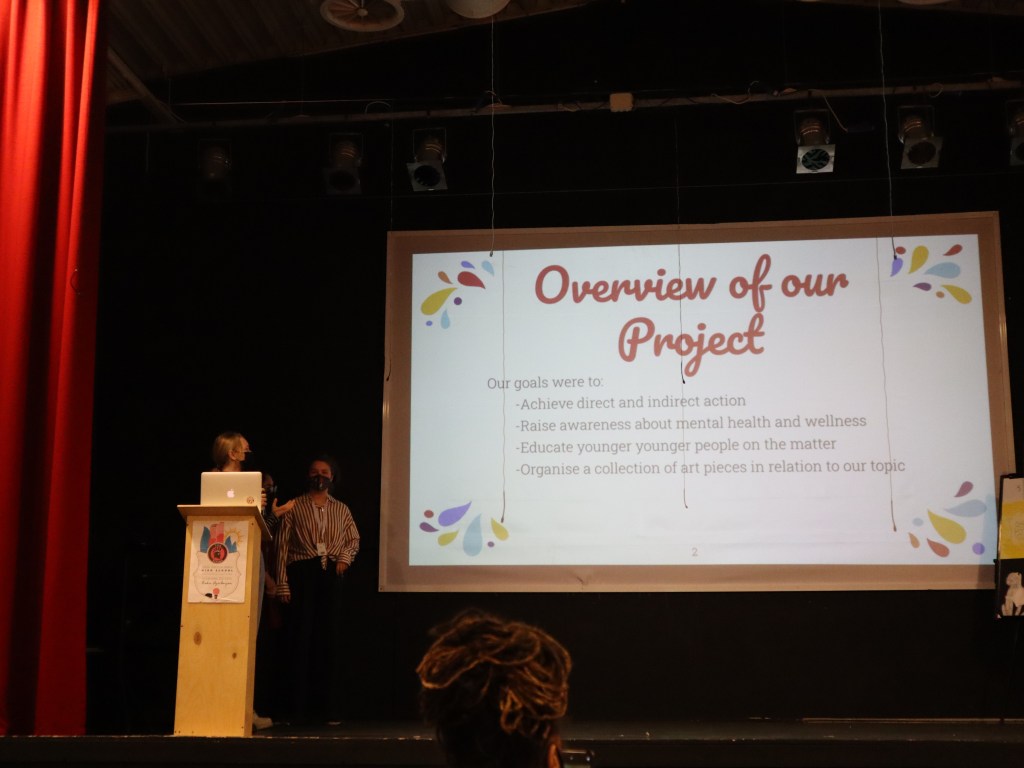
Mariia: My group’s goal was to achieve direct and indirect action when tackling the topic of mental health as well as overall wellbeing in young children, and incorporating the arts into this process. We worked with a group of P6s on their mental health and created a collection of art pieces.
Were there any challenges when working with primary, COVID-related, or otherwise?
Mariia: Yeah, I believe we did three sessions in person and then one session where we had to, unfortunately, move away from working with them face-to-face. It did create a lot of challenges; there were some technical issues, where either we couldn’t hear them or they couldn’t hear us. Sometimes the things they were saying would lag out so you couldn’t really understand them, and because it was their teacher who had the Google Meet up with the students in the room, the microphone just wouldn’t pick them up sometimes.
How did your group decide on the topic of mental health?
Mariia: We made a document where we just listed things we liked and topics that we would like to focus on, and we noticed that all three of us had mental health on our lists. Two of us had the topic of art as something we enjoyed doing and one of our ideas was working with the younger students, so we kind of put that all together.
How is this topic important to the community and you and your group members?
Mariia: Well, mental health is something a lot of people find struggles with. It’s such a global thing that you can’t exclude anyone from this conversation. One of our group members, Pippa, has younger siblings and she found that it was difficult for them to express their emotions and really tackle their own mental health in a positive and healthy way, so it was especially important to her to be able to help out these children.
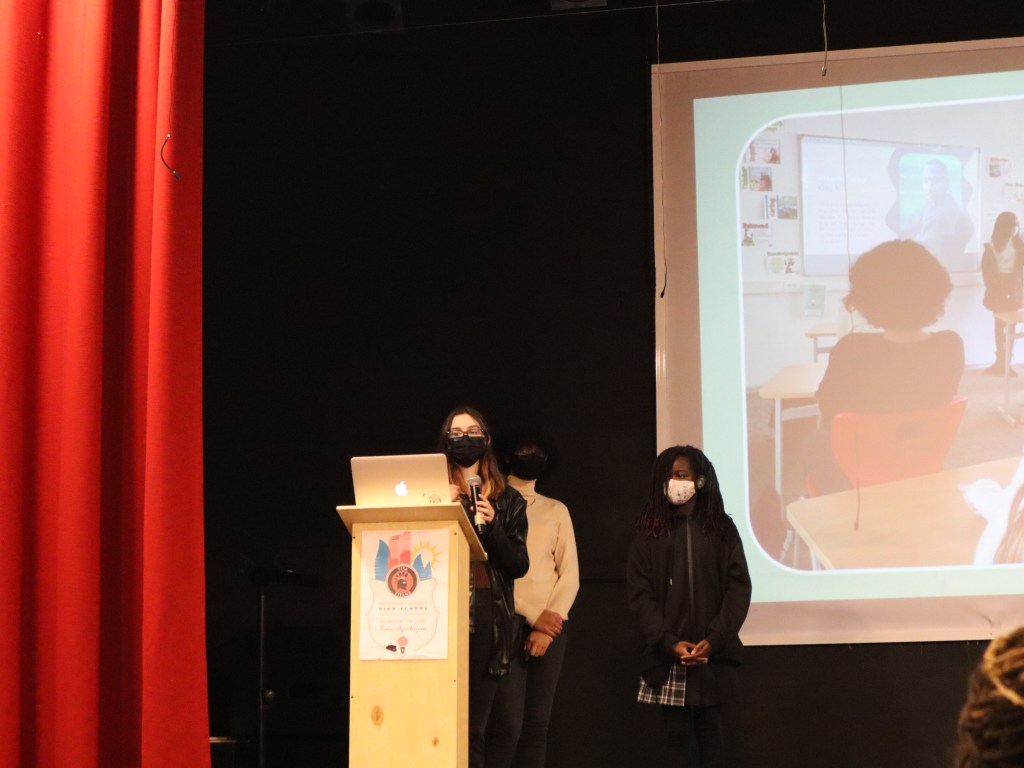
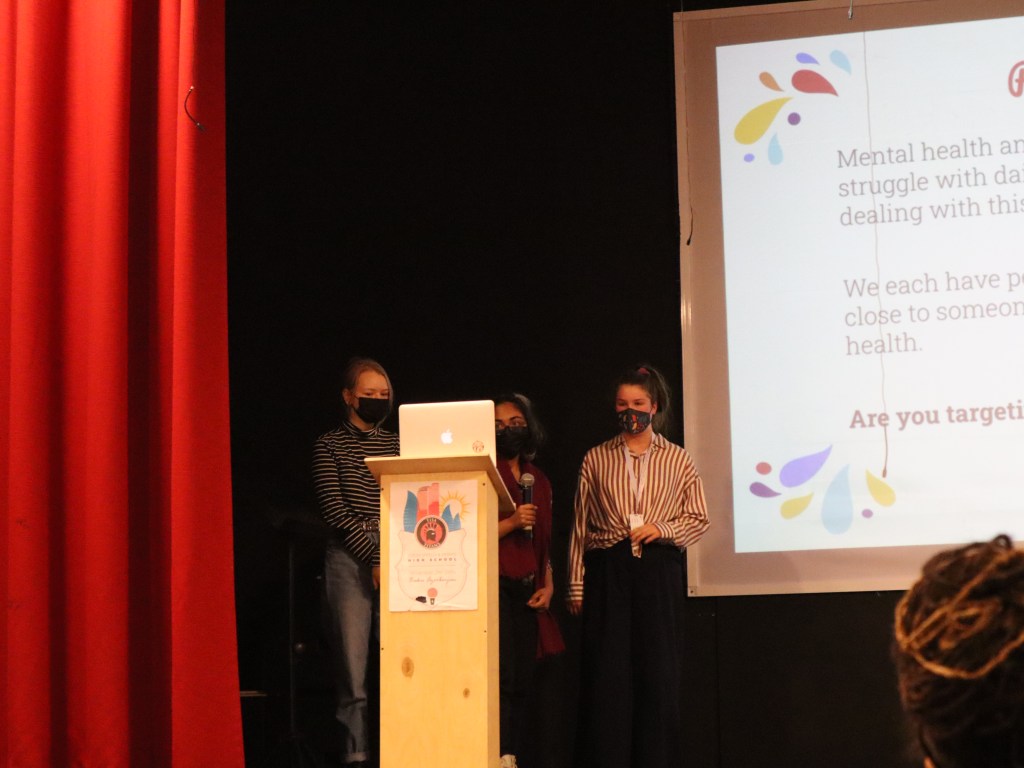
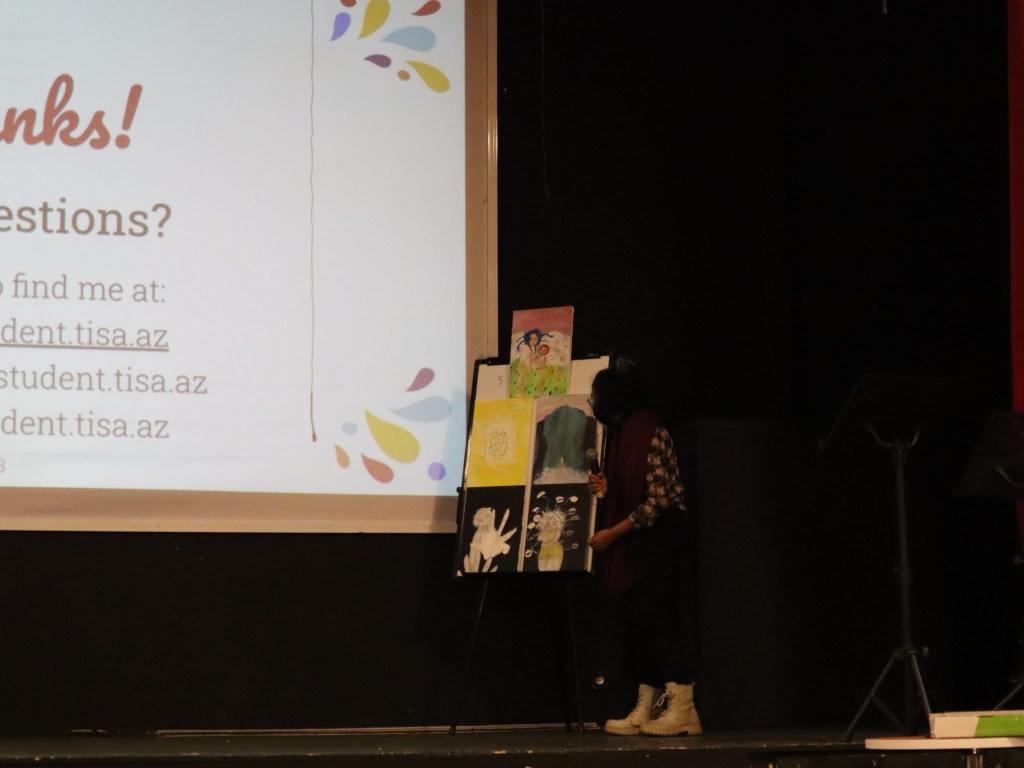
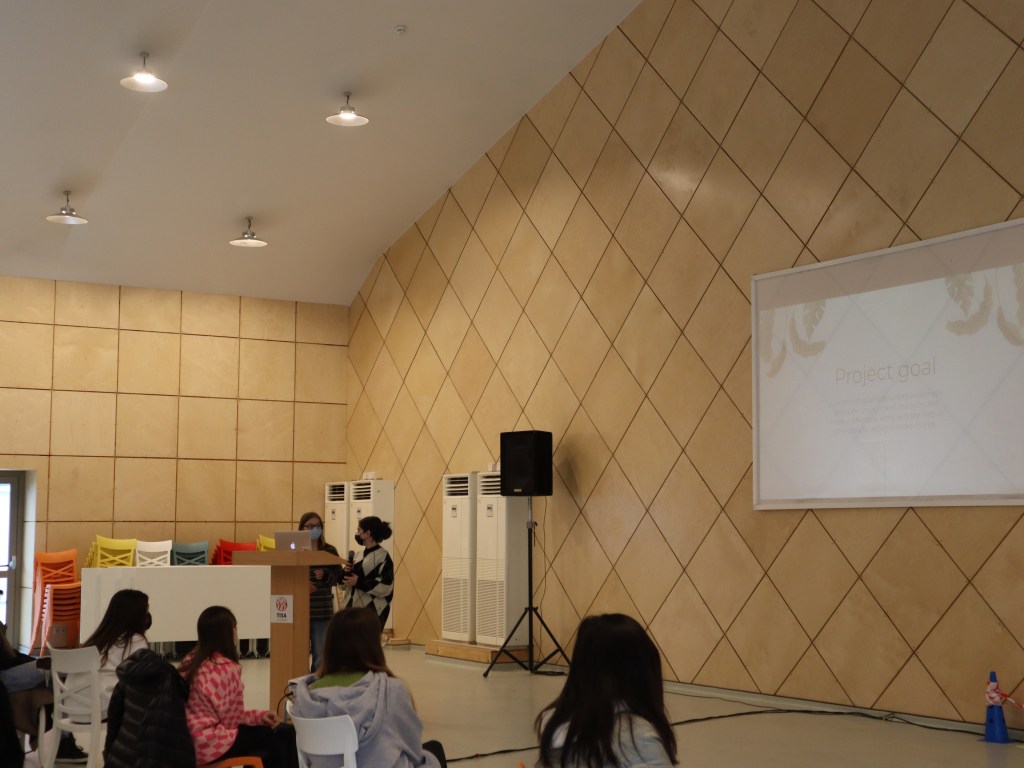
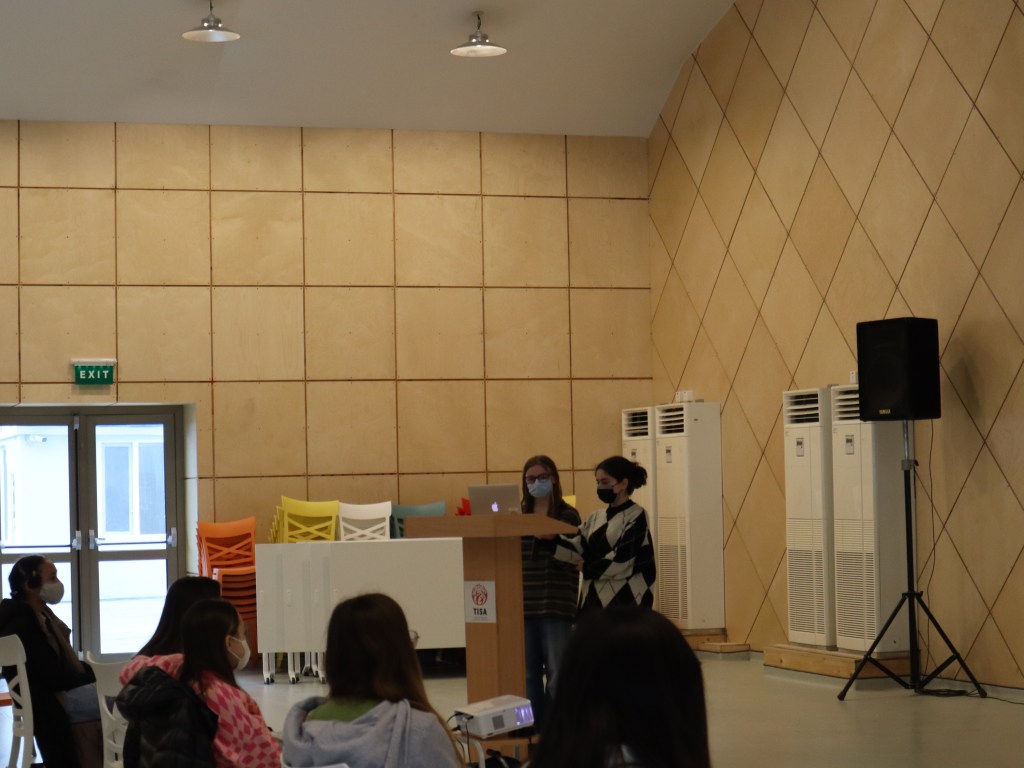
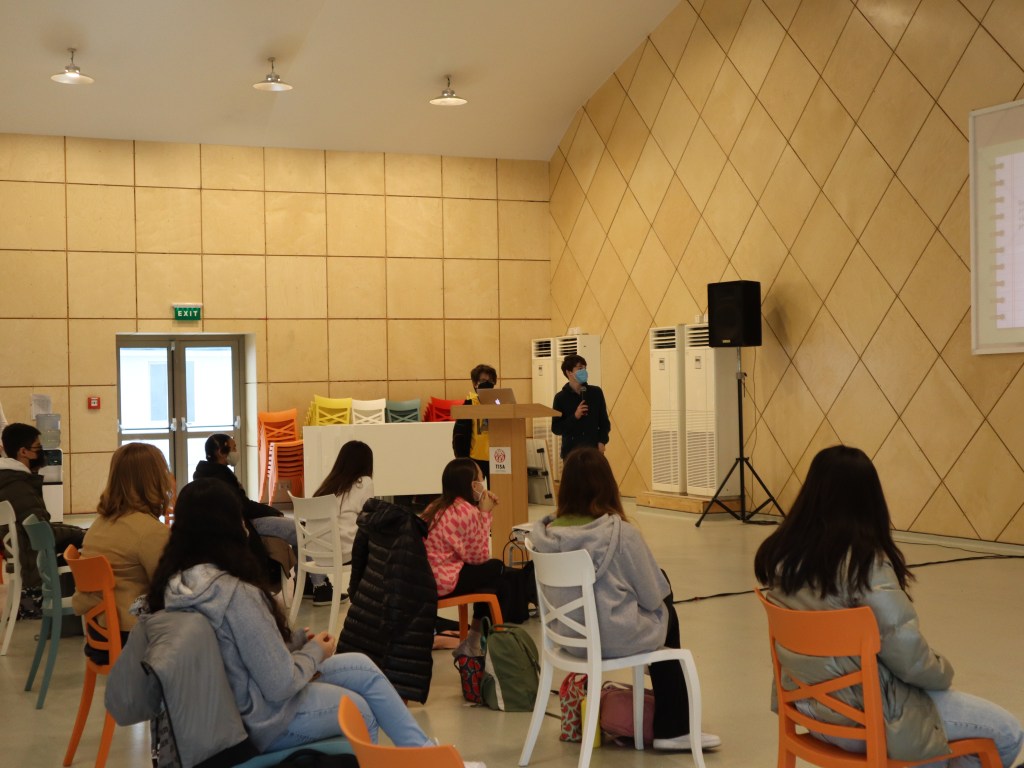
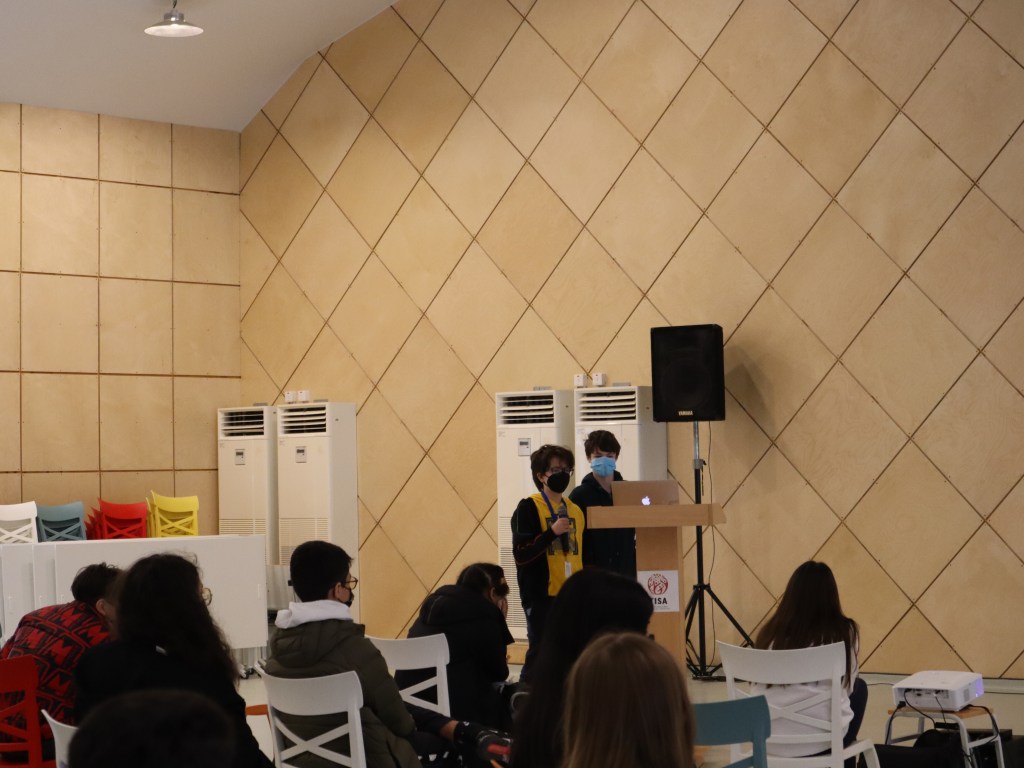
M3 presented their Community Projects in school on the 25th of February; here are some pictures from that day.
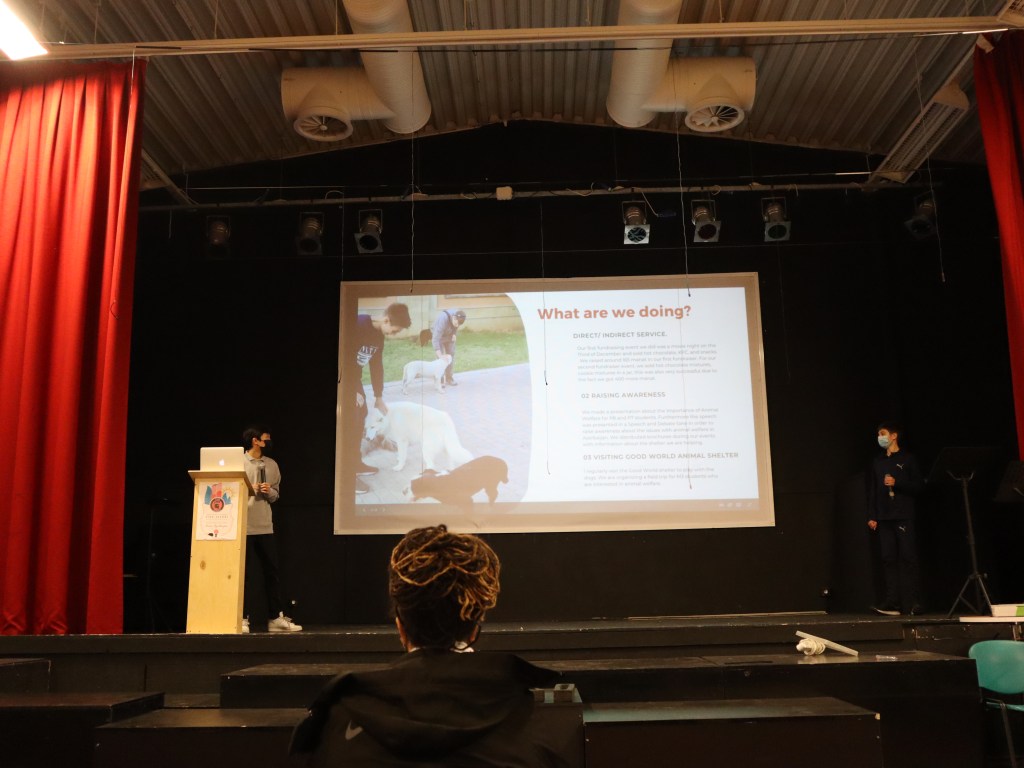
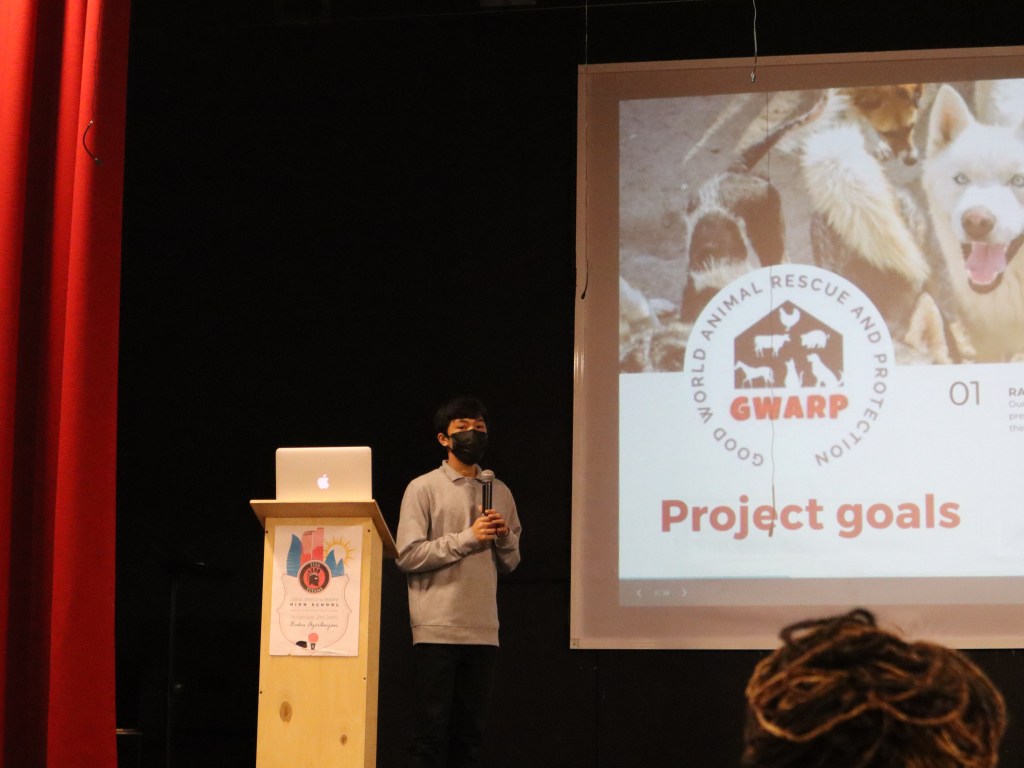
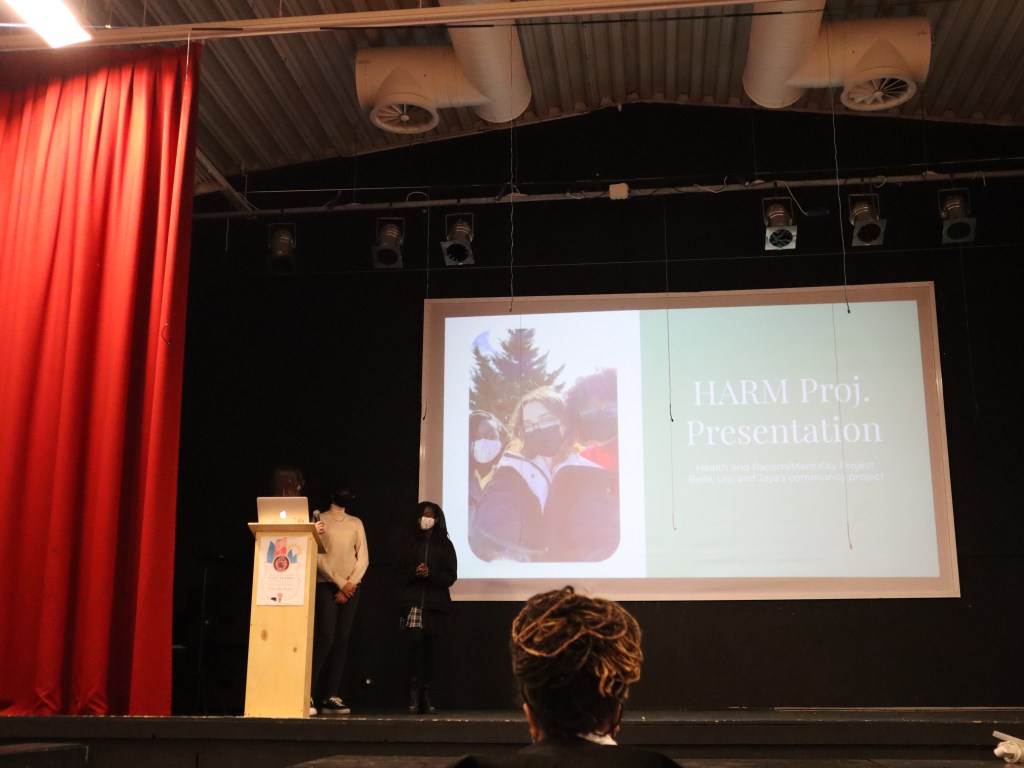
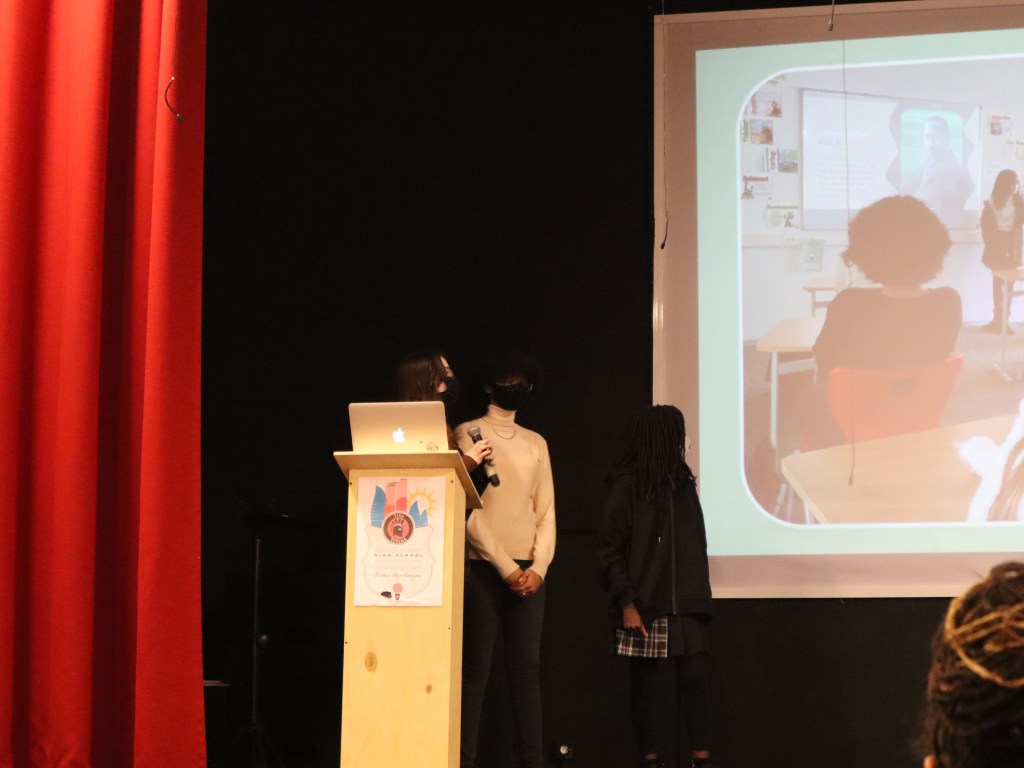

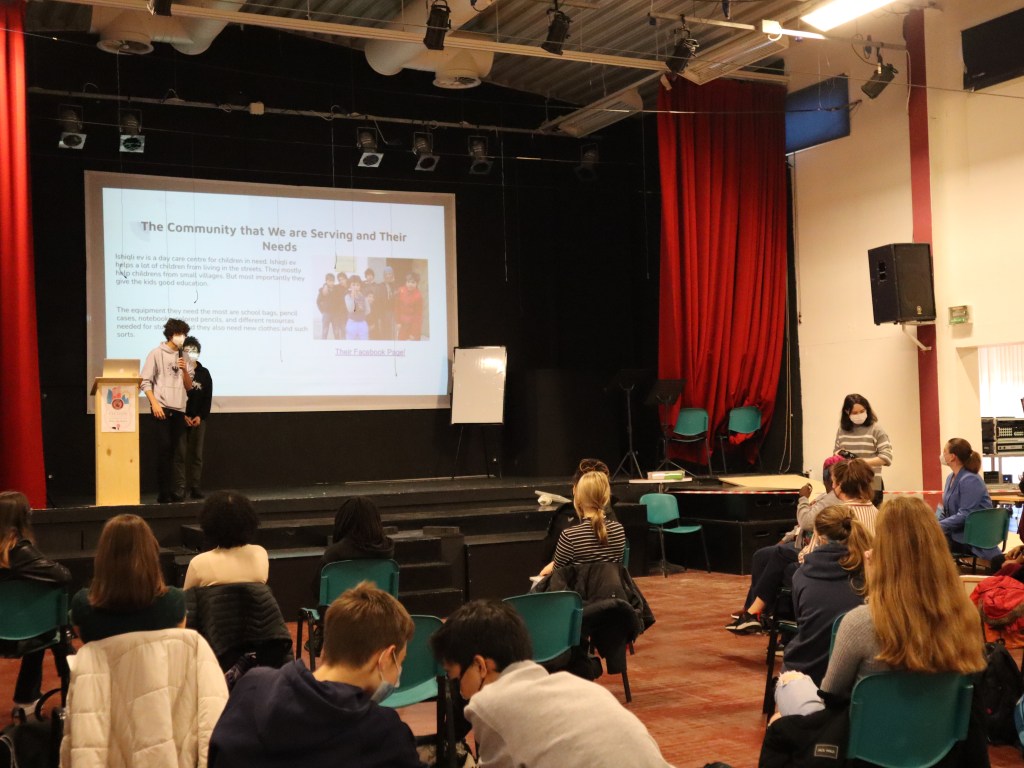
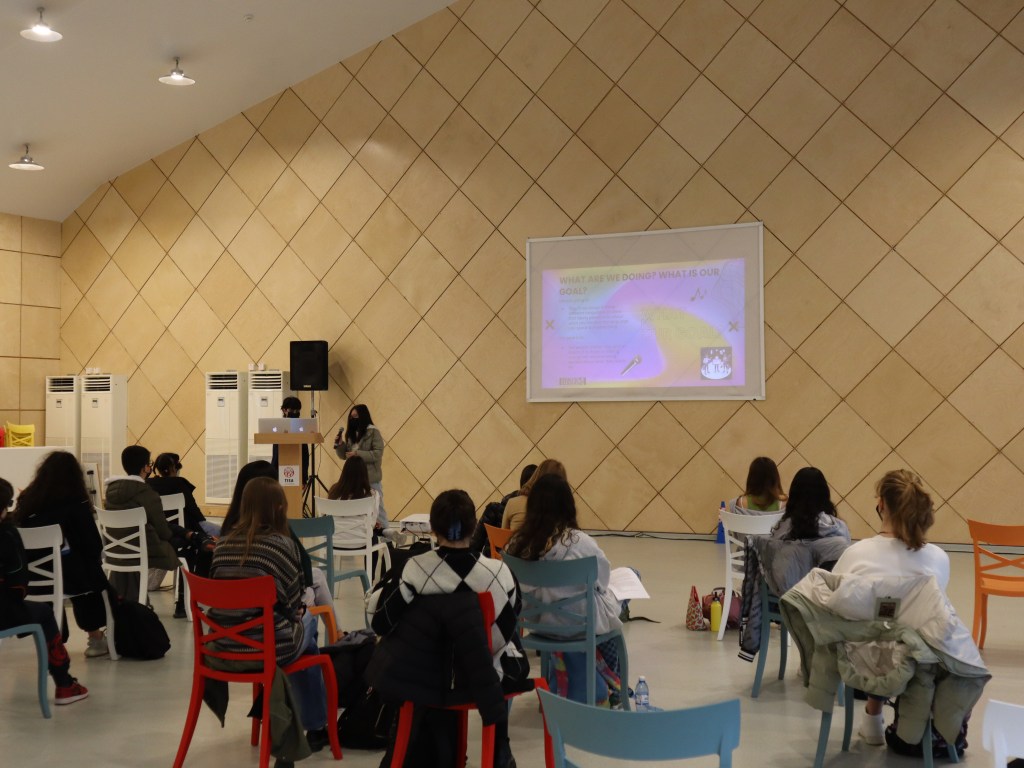
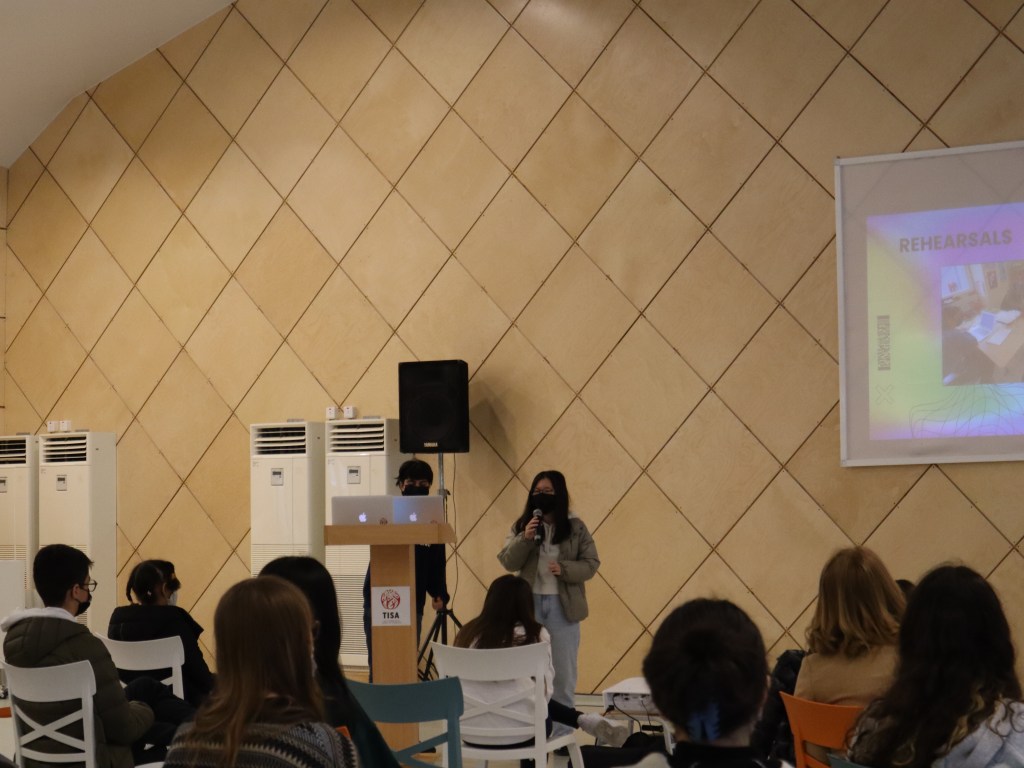
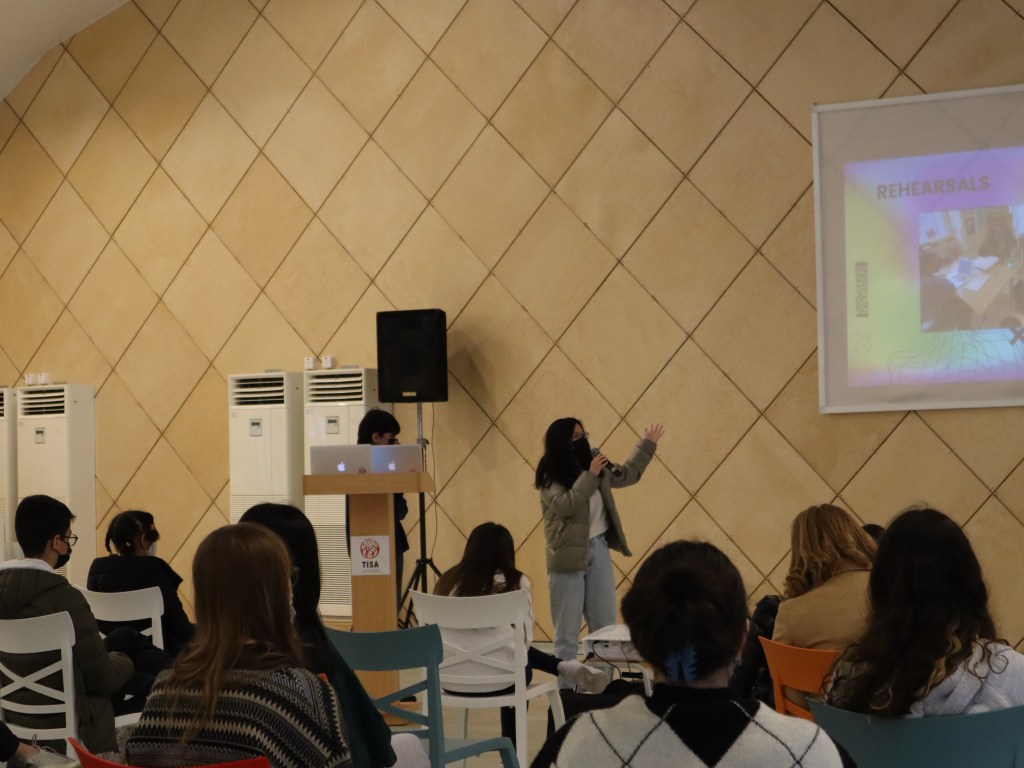

The Community Project, along with the Personal Project, was also presented after school on the 9th of March to parents. Check out our website for some pictures!
Many organizations were supported by the M3 students for their Community Projects. Here are some ways you can support them:
- Blue Dragon is a charity that rescues children who have been victims of human trafficking and slavery in Vietnam. You can help by raising awareness of their organization and keeping your eye out for fundraisers coming up; you could even organize your own. They also take donations on their website.
- Azerbaijan Animal Rescue Shelter (AARC), IDEA Animal Shelter, and Good World Shelter could all use your donations of dog food, blankets, and medicine. You can also directly donate from some of their websites and social media pages.
- Ishiqli Ev, a children’s shelter in Azerbaijan, can use your support in donating hygiene supplies and clothes. While there isn’t one happening now, TISA occasionally organizes collections for the shelter. They don’t have a website or any good social media accounts, and as awareness is needed for this shelter, it would be helpful if someone could design this for them.
- For Azerbaijan’s Women and Children’s Reintegration Center, contact the members of the gender-based violence group if you want to donate your clothes; there are some conditions, though, that are included in a ManageBac message from February 28th.
- The group working with Caspian Compassion, a local eye clinic, worked on painting murals to create a calm waiting room environment for patients awaiting eye procedures. One way you could help is by volunteering to paint more murals.
- Donating Azerbaijani books for teens to the Youth Offenders Center would be helpful; contact M3 students Alisa, Joel, and Maria for further information.
- For the projects focusing on TISA and the Stonepay community, you can spread awareness and volunteer your help to sustain these projects.
The Community Project gives students the opportunity to take action, an opportunity they may have otherwise not had. Great job to our M3s for the amazing work done this year and for truly making a change. M2s, look out; next year, you’ll be doing this too!

 Welcome to the TMC